
Varicose Veins
Bulging, twisted veins are often more than a cosmetic concern
Varicose veins are enlarged, twisted, rope-like veins that bulge under the surface of the skin. They most commonly appear on the calves, ankles, and thighs. While many view them purely as a cosmetic issue, they are actually a physical symptom of an underlying circulatory problem.
Why Varicose Veins Bulge
Inside your leg veins are tiny, delicate, one-way valves. These valves act as gates, allowing blood to flow upward toward your heart, and closing immediately to prevent blood from flowing backward.
Under high stress (due to genetics, pregnancy, or standing all day), these valves can leak and fail. Blood slips backward and pools in your superficial veins. Over time, the pooled blood stretches the thin walls of these veins, causing them to twist, swell, and bulge noticeably under your skin.
Warning Signs of Vein Disease:
- Bulging blue, green, or deep purple veins under the skin.
- Aching, heavy fatigue, throbbing, or burning around bulging veins.
- Itching or localized skin irritation near the visible veins.
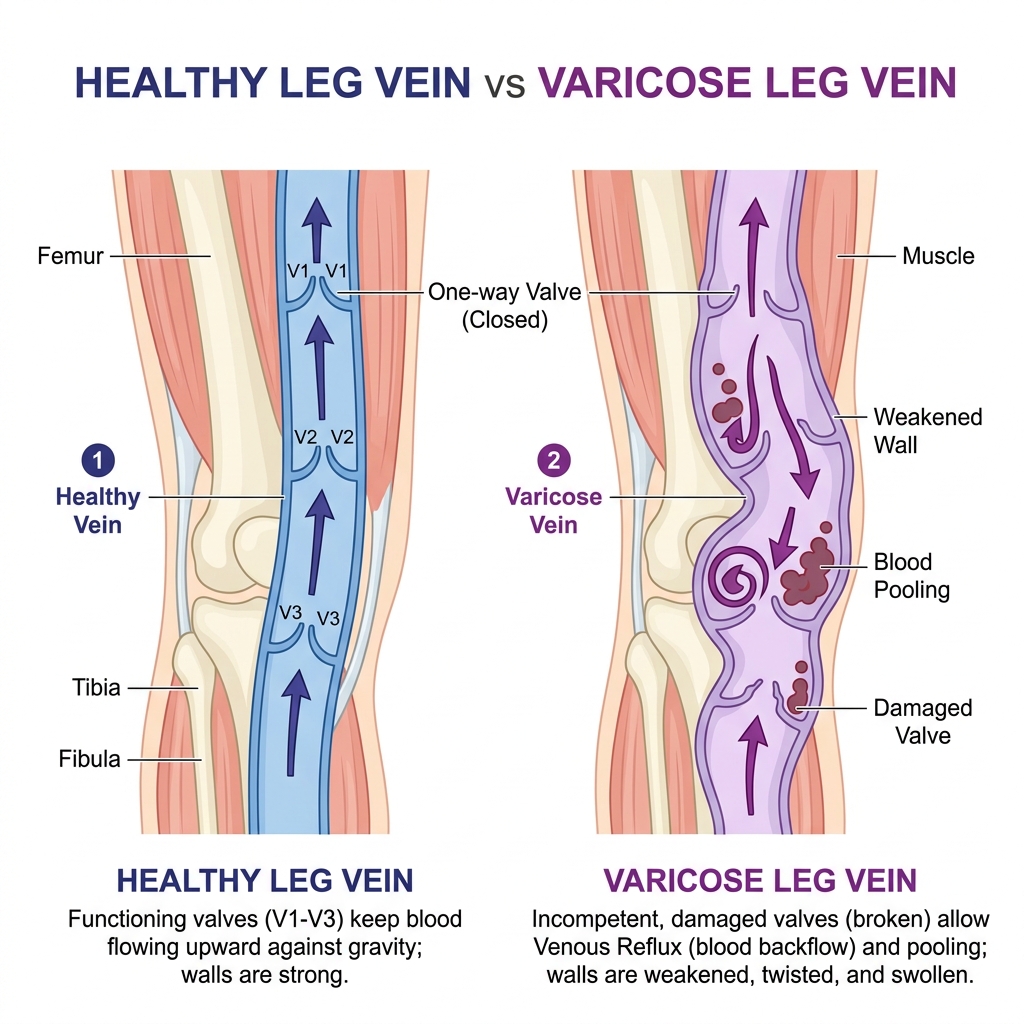
Healthy vein valves vs. damaged valves in a varicose vein.
Answers to Common Varicose Veins Questions
What causes varicose veins to bulge?
The bulging is caused by fluid pressure. When the one-way valves inside your leg veins break down, blood slips backward (venous reflux) and accumulates in the superficial veins close to the skin. Because these superficial veins have thin, elastic walls, they stretch under the weight of the pooled blood. This high pressure forces the vein to swell, twist, and bulge outward, creating the characteristic rope-like appearance.
Are varicose veins always dangerous?
Usually, varicose veins are not immediately dangerous, but they are a progressive medical condition. If left untreated, the chronic high pressure can lead to worsening symptoms such as persistent aching, lower leg swelling, skin changes (discoloration and thickening), stasis dermatitis, and in advanced stages, extremely slow-healing open sores called venous ulcers.
Can varicose veins disappear without surgery?
Once a vein's wall has stretched and its valves have failed, the bulging vein will not disappear on its own or through diet/exercise alone. However, the symptoms (aching, fatigue, swelling) can often be managed very effectively through conservative methods like wearing graduated compression stockings, elevating your legs, and staying active. To permanently remove bulging veins, a vein specialist can perform minor in-office procedures that safely shut down the damaged vein.
Watch: Myths & Compression Care for Varicose Veins
Explore key educational topics on our channel, including common varicose vein myths, symptoms, and the clinical benefits of compression stockings.
Varicose Veins Simplified: Myths Uncovered
Do You REALLY Need Compression Stockings? (Doctor Explains)
Frequently Asked Questions
Do varicose veins run in families?
Will crossing my legs cause varicose veins?
How can a telehealth consultation help with varicose veins?
Address your varicose veins today
If you are a Florida resident looking for professional, physician-led guidance about your bulging veins, book your telehealth consultation with Gentle Vein Care Center online today.