
Leg Swelling (Edema)
Understanding fluid accumulation, graduated pressure, and proper leg health
Noticing that your shoes are tight by late afternoon, or seeing deep indentations from your socks around your ankles, can be concerning. Known medically as edema, lower leg swelling has many causes, but it is frequently one of the earliest signs of underlying venous insufficiency.
How Vein Problems Cause Swelling
Under normal conditions, your veins work against gravity to push blood back up to your heart. Tiny one-way valves inside the veins keep blood from flowing backward.
If these valves stretch or fail (a condition known as venous reflux), blood begins to flow backward and pool in your lower legs. The resulting high pressure inside the veins forces watery fluid out of the blood vessels and into the surrounding tissues, leading to noticeable swelling in your ankles, calves, and feet.
Vein-Related Swelling Patterns:
- Worsens late in the day or after long periods of standing or sitting.
- Often gets better overnight or when you elevate your legs above your heart.
- Frequently occurs alongside aching, heaviness, visible varicose veins, or ankle sock lines.
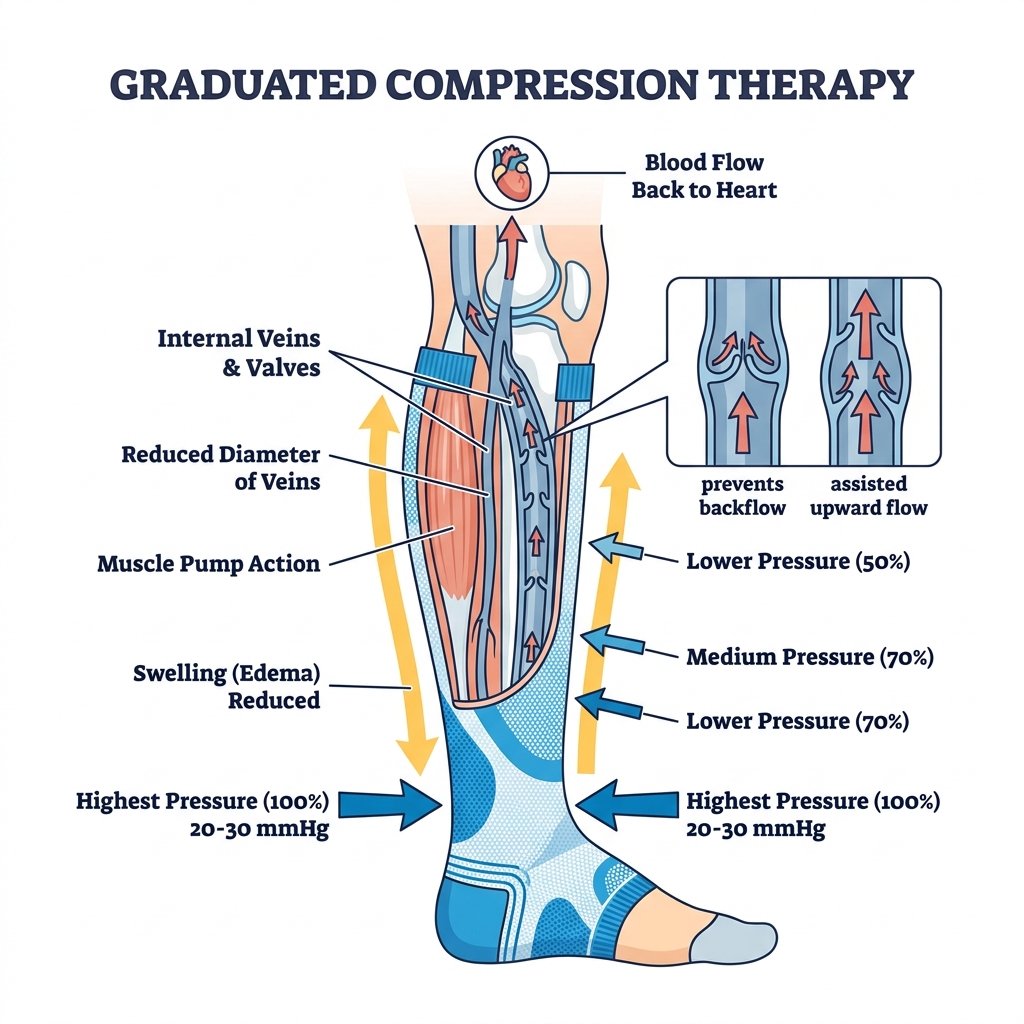
How graduated compression helps push blood and fluid back up the leg.
Answers to Common Leg Swelling Questions
Why do my ankles and legs swell by the end of the day?
Throughout the day, gravity continually pulls blood and fluid downward. If you spend hours sitting at a desk or standing on hard surfaces, your calf muscles remain inactive. If your vein valves are also leaky, blood pools in your lower limbs. By late afternoon, this high pressure forces fluid into your leg tissues, causing your ankles, feet, or lower calves to swell.
Is leg swelling always a vein problem?
No. While vein disease is a very common cause, leg swelling can also be related to heart, kidney, or liver conditions, lymphatic blockage (lymphedema), certain medications (like calcium channel blockers for blood pressure, or steroids), chronic standing, or injury. Because swelling can indicate several different health states, a professional clinical review is highly recommended.
When is leg swelling an emergency?
Most vein-related swelling accumulates gradually over months or years. However, sudden leg swelling on only one side is a medical emergency and could indicate a deep vein blood clot (DVT). If your swelling is sudden, accompanied by chest pain, shortness of breath, heavy coughing, severe calf pain, redness, or a fever, do not wait for a routine telehealth consult—seek emergency medical care right away.
Watch: Leg Swelling Explanations & Compression Stockings
Learn from the Gentle Vein YouTube channel what evening leg swelling means and how specialized medical compression socks work to prevent fluid buildup.
Swollen Legs at Night? Here's What It Means
Do You REALLY Need Compression Stockings? (Doctor Explains)
When Leg Swelling Requires Immediate Attention
While standard slow-onset leg swelling is suitable for routine care, sudden symptoms can be highly dangerous.
Please go directly to the nearest emergency room or call 911 if you experience:
- Sudden, rapid swelling in one leg only
- Leg swelling accompanied by chest pain or difficulty breathing
- Coughing up blood with leg swelling
- A swollen leg that is red, hot to the touch, and severely painful
Frequently Asked Questions
How do compression stockings help reduce swelling?
Can drinking more water help with leg swelling?
What should my next step be for chronic swelling?
Address your leg swelling today
If you are a Florida resident experiencing recurring leg or ankle swelling, get expert physician-led guidance through a convenient online consultation.