
Leg Ulcers & Open Wounds
Understanding slow-healing sores, lower leg pressure, and safe healing strategies
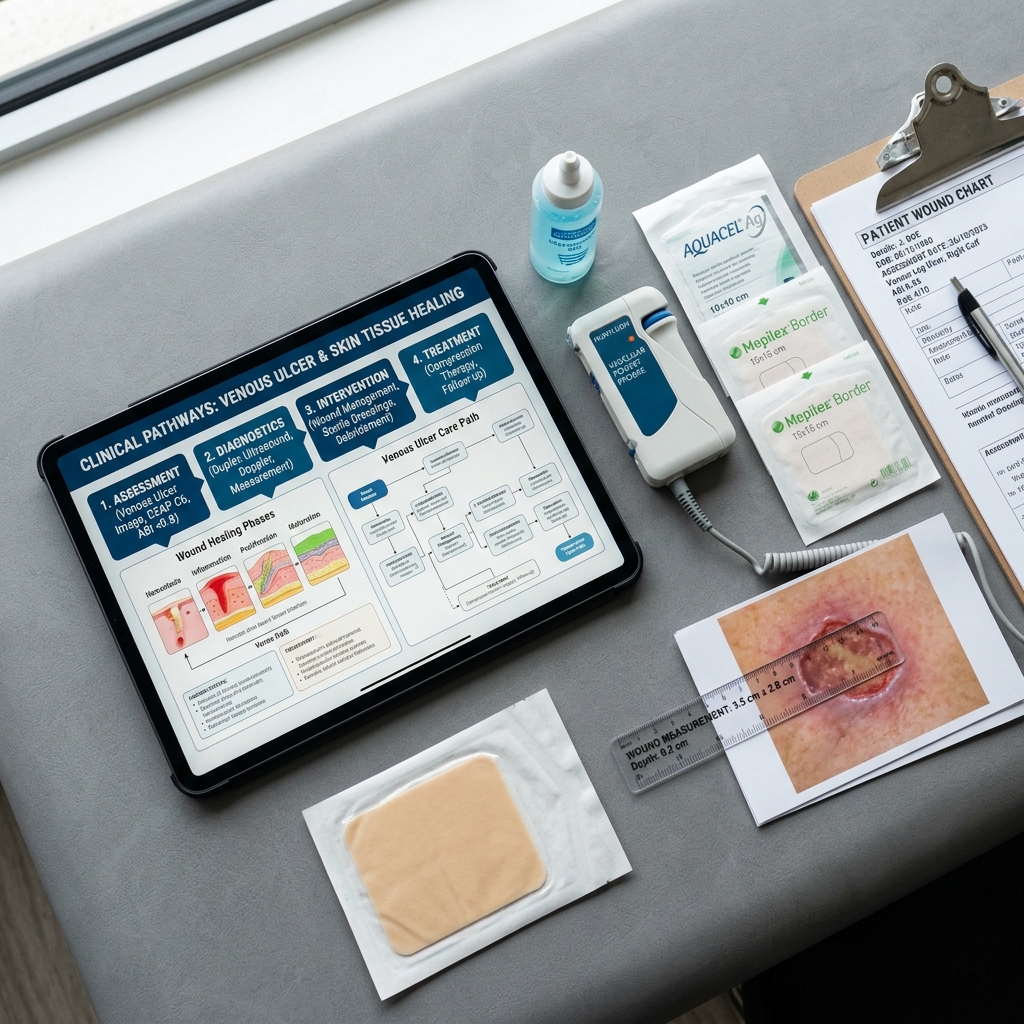
An open sore or wound on your lower leg or ankle that takes more than a few weeks to heal is a serious medical sign. Known as a venous leg ulcer, this type of open wound is typically caused by chronic poor venous circulation and high leg tissue pressure. Because these wounds are fragile and prone to infection, proper clinical management is essential.
Why Venous Ulcers Form
A venous leg ulcer is not a standard skin scratch. It is the result of advanced, long-term vein disease (chronic venous insufficiency). When leaky vein valves allow blood to pool in the lower leg, the pressure inside the veins rises dramatically.
This high fluid pressure restricts the natural flow of fresh, oxygenated, nutrient-rich arterial blood into the skin and surrounding tissues. Over time, the starved skin tissues break down, creating an extremely slow-healing open sore.
Characteristics of Venous Leg Ulcers:
- Typically located on the inner side of the lower leg, just above the ankle.
- Often surrounded by swollen, dry, scaly, or dark-brown stained skin.
- Prone to oozing or producing watery drainage.
Answers to Common Leg Ulcer Questions
What exactly is a venous leg ulcer?
A venous leg ulcer is a chronic, open sore that forms on your lower leg—most commonly near the ankle bone—due to poor circulation. Unlike normal cuts that heal within a few days, venous ulcers persist for weeks, months, or even years because the surrounding tissues are constantly congested and high in pressure, preventing the body's natural cellular repair mechanisms from closing the skin barrier.
Why do venous ulcers take so long to heal?
Leg wounds need oxygen-rich, nutrient-dense blood to build new skin cells. However, in legs with venous insufficiency, the chronic pooling of blood acts like a traffic jam—preventing fresh arterial blood from reaching the wound site. Additionally, chronic swelling (edema) stretches the skin and increases tissue fluid, which dilutes healing factors and leaves the wound vulnerable to bacterial colonization and persistent inflammation.
What is the most critical treatment for venous ulcers?
The absolute foundation of venous ulcer healing is graduated compression therapy combined with specialized wound dressings. Compression stockings or multilayer wraps apply direct, supportive pressure to your leg, which squeezes the superficial veins and forces pooled blood back up to your heart. This dramatically lowers venous pressure and resolves leg swelling, allowing oxygen-rich blood to reach the wound and enabling the skin to finally close.
Watch: Why Graduated Compression is Critical
Explore how graduated compression stockings decrease the underlying high pressure in lower leg veins, enabling blood to circulate efficiently and support tissue healing.
Don't Ignore These 5 Varicose Vein Warning Signs
Do You REALLY Need Compression Stockings? (Doctor Explains)
When Leg Wounds Require Immediate Emergency Care
Open wounds on the lower legs are highly vulnerable to bacterial infections and vein ruptures.
Please go directly to the nearest emergency room or call 911 if you experience:
- Active, heavy bleeding from a leg vein or wound (elevate leg immediately and apply firm direct pressure)
- Leg redness that is hot to the touch and spreading rapidly around the wound
- Pus, a foul odor, or thick yellow drainage from the sore
- A leg wound accompanied by fever, chills, or systemic illness
Frequently Asked Questions
Can I wear compression stockings with an open wound?
How do I know if my leg ulcer is venous or arterial?
How can a telehealth consultation help with leg ulcers?
Begin your path to leg wound healing
If you are a Florida resident struggling with a slow-healing open leg wound or sore, get immediate professional guidance. Book a telehealth consultation online today.
Telehealth services are available for eligible Florida patients. In-person Central Florida location coming soon.