
Skin Changes & Discoloration
Why chronic vein issues cause red, brown, or thickened skin near the ankles
Have you noticed reddish-brown patches, shiny tight patches, or dry, flaky, irritated skin near your ankles and lower shins? These are serious circulatory indicators. Known as venous skin changes, they occur when chronic high pressure inside your veins goes unmanaged, slowly damaging the surrounding skin.
Understanding Venous Stasis
When blood pools in your lower legs over months and years due to leaky vein valves, it creates a state of chronic venous stasis. The high pressure stretches your capillaries—the tiniest blood vessels in your legs.
Eventually, red blood cells are pushed out of these tiny vessels and leak directly into your skin tissues. As these red blood cells break down, the iron they contain stains your skin a permanent, rusty brown color—a process called hemosiderin staining.
Progressive Stages of Vein-Related Skin Damage:
- Stasis Dermatitis: Dry, red, intensely itchy, scaling skin near the ankles.
- Hemosiderin Staining: Brownish, rust-colored discoloration that does not fade.
- Lipodermatosclerosis: Hardened, woody-feeling skin that makes the leg look narrow at the bottom (inverted bowling pin look).
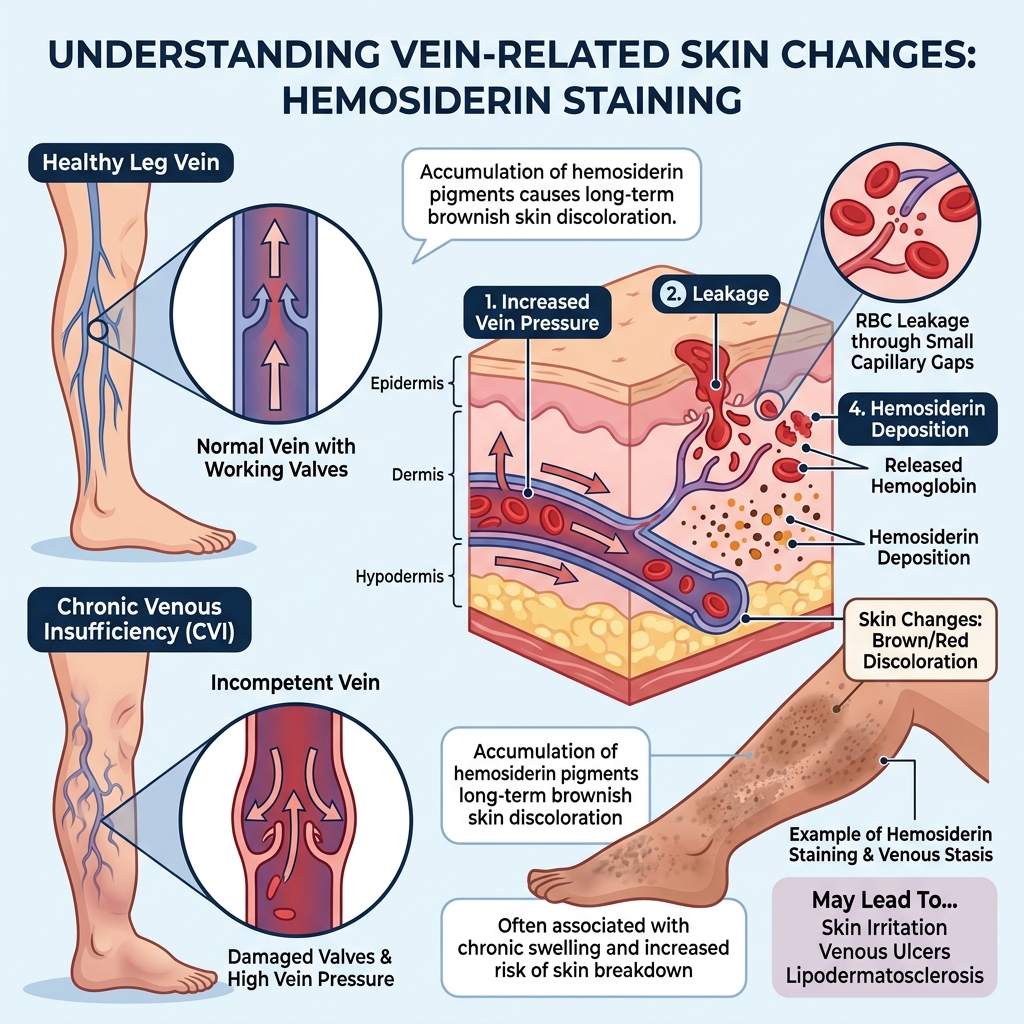
Our newly developed diagram showing how blood pressure and leakage lead to stasis staining.
Answers to Common Skin Discoloration Questions
Why is the skin around my ankles turning brown or red?
This is caused by iron staining. The high fluid pressure from leaky vein valves causes red blood cells to squeeze out of your capillaries and into your skin tissue. Your body's immune system breaks down these misplaced red blood cells, releasing hemoglobin. Hemoglobin contains iron, which decays into a pigment called hemosiderin. This hemosiderin acts like an internal rust, permanently staining the skin near your ankles and shins a reddish-brown or dark-brown color.
What is venous stasis dermatitis?
Venous stasis dermatitis is an inflammatory skin condition caused by poor circulation. As pooled blood and fluid congest your lower legs, it deprives the skin tissues of proper oxygen and nutrients. This triggers chronic inflammation, making the skin on your lower shins and ankles look red, swollen, dry, scaly, and intensely itchy. It is sometimes confused with standard eczema, but it is a circulatory problem that requires addressing the underlying veins.
Can these skin changes be reversed?
Once hemosiderin (iron) has stained the skin, the dark brown discoloration is very difficult to completely reverse and is often permanent. However, **the active skin inflammation, scaly dryness, leg swelling, and risk of developing open wounds can be drastically improved and managed**. By using graduated compression stockings, elevating your legs, and potentially receiving minimally invasive vein treatment to shut down the faulty veins, you can relieve venous pressure, allowing the skin to heal and preventing progressive damage.
Watch: Why Graduated Compression is Critical
Explore how graduated compression stockings counteract high venous pressure, reduce lower leg swelling, and support the long-term health of your skin tissues.
Don't Ignore These 5 Varicose Vein Warning Signs
Do You REALLY Need Compression Stockings? (Doctor Explains)
When Skin Redness is Urgent
While chronic, brown skin discoloration is a slowly developing sign, sudden redness can indicate a serious, acute infection like cellulitis. Because stasis dermatitis damages the skin barrier, bacteria can easily enter and cause deep tissue infection.
Go to an urgent care or emergency room immediately if you experience:
- A rapidly spreading, bright red area on your leg
- A leg area that is hot to the touch and highly painful
- Pus or fluid draining from the red area
- Leg redness accompanied by fever, chills, or sweating
Frequently Asked Questions
Is stasis dermatitis contagious?
Does scratching stasis dermatitis cause problems?
How can a telehealth consultation help with skin changes?
Protect your skin and improve circulation
If you are a Florida resident noticed reddish-brown ankles or scaly, itchy shins, get physician-led guidance from Gentle Vein today. Book your telehealth consult online.
Telehealth consultations are available for eligible Florida patients. Future Central Florida location coming soon.