

Compression Therapy Guide
Compression stockings can be a practical first step for leg swelling, aching, heaviness, and vein symptoms
Compression therapy is one of the most common conservative tools used for vein-related leg symptoms. It may help support blood flow in the legs, reduce swelling, and improve comfort for some patients with varicose veins, spider veins, venous reflux, chronic venous insufficiency, or prolonged standing-related leg discomfort.
Gentle Vein Care Center offers online vein consultations for eligible Florida patients who want physician-led guidance about leg symptoms and whether compression stockings may be appropriate.
Our Central Florida in-person vein clinic location is coming soon.
Compression stockings are not right for everyone. Some people should be evaluated before using medical-grade compression, especially if they have circulation problems, wounds, nerve problems, severe swelling, or other medical conditions.
What Is Compression Therapy?
A non-procedure option that supports the legs
Compression therapy usually involves wearing specially designed stockings or socks that apply pressure to the legs.
The goal is to help support blood movement upward toward the heart and reduce fluid buildup in the lower legs. Compression can be especially helpful for people whose symptoms worsen after standing or sitting for long periods.
Compression therapy may be used for:
- Varicose vein symptoms
- Leg swelling
- Heavy or tired legs
- Aching or throbbing legs
- Venous insufficiency
- Prolonged standing or sitting
- Travel-related leg swelling
- Pregnancy-related leg symptoms, when appropriate
- Post-procedure support after certain vein treatments
- Prevention or management of some vein-related symptoms
Compression does not "cure" varicose veins or venous reflux, but it may help manage symptoms and support conservative care.
How Compression Stockings Work
Gentle pressure helps support circulation
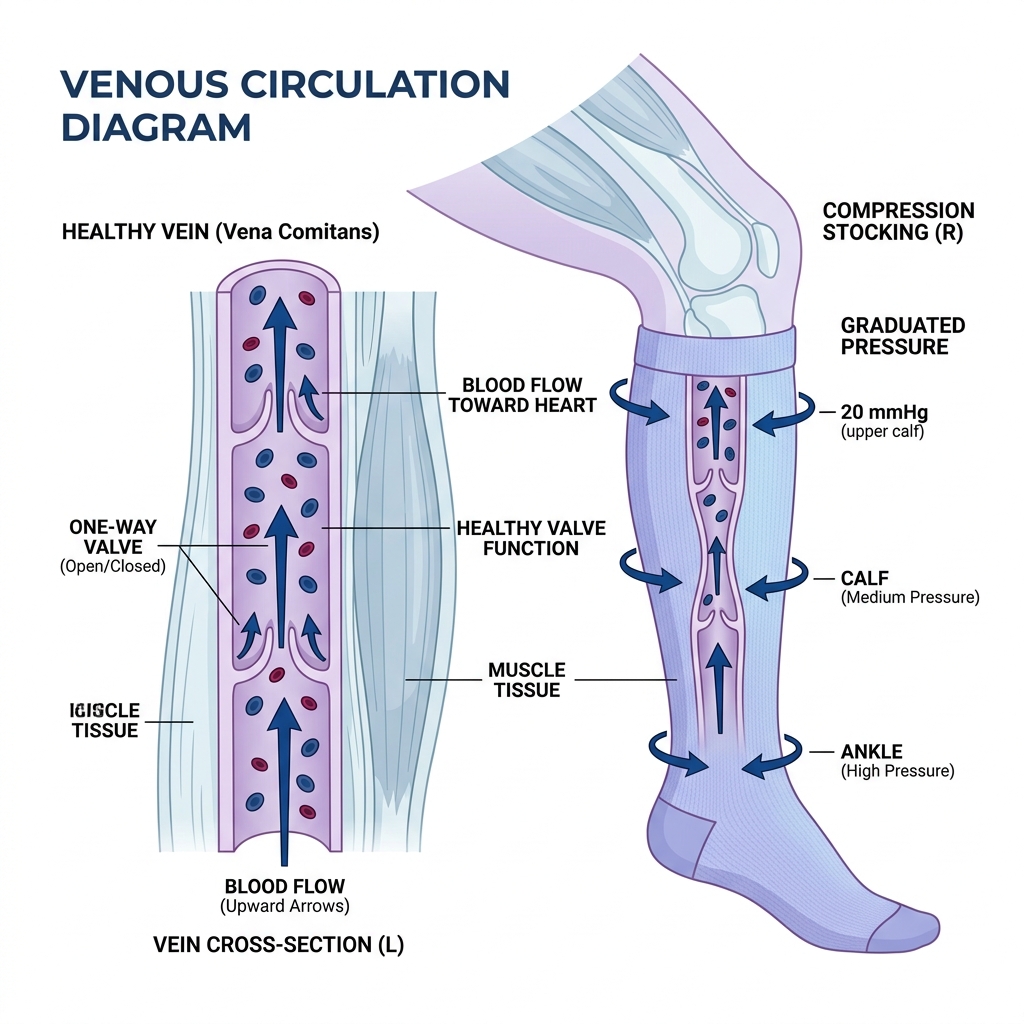
Healthy leg veins move blood upward toward the heart. Small valves inside the veins help keep blood from flowing backward.
When vein valves do not work well, blood can pool in the legs. This can contribute to symptoms such as swelling, aching, heaviness, throbbing, fatigue, and skin changes.
Compression stockings apply outside pressure to the leg. This pressure may help:
- Reduce swelling
- Support blood flow
- Decrease leg heaviness
- Improve comfort during standing or sitting
- Support the calf muscle pump
- Reduce fluid buildup around the ankles
- Help some patients manage vein-related symptoms
The amount of benefit depends on the person, the cause of symptoms, the compression level, the fit, and how consistently the stockings are worn.
Symptoms That May Improve With Compression
Compression may help some patients feel more comfortable
Compression therapy may be considered for symptoms such as:
Leg swelling
Compression can sometimes help reduce ankle or lower-leg swelling, especially when swelling worsens throughout the day.
Heavy or tired legs
Some patients feel less heaviness when using compression during long periods of standing, sitting, or walking.
Aching or throbbing
Compression may help reduce discomfort associated with vein pressure or visible varicose veins.
Varicose vein symptoms
Compression may help manage discomfort from varicose veins, although it does not remove the veins.
Restless or uncomfortable legs
Some people with vein-related discomfort describe improvement with compression, especially when symptoms worsen after standing.
Skin irritation or early skin changes
In some patients with chronic vein problems, compression may be part of a broader care plan. Skin changes should be evaluated carefully.
When Compression May Not Be Enough
Compression can help symptoms, but it may not solve the underlying problem
Compression stockings may reduce symptoms, but they do not remove varicose veins or correct vein valve problems.
You may need further evaluation if you have:
In many cases, a duplex ultrasound is needed to evaluate vein function and determine whether venous reflux or another vein issue may be present.
Compression Levels
The right pressure matters
Compression stockings come in different pressure levels, usually measured in mmHg, which means millimeters of mercury. The higher the number, the stronger the compression.
Light compression
Often used for mild tiredness, minor swelling, travel, or long periods of sitting or standing.
Mild to moderate compression
Often used for mild varicose vein symptoms, mild swelling, or daily leg support.
Medical-grade compression
Often used when patients have more significant swelling, varicose veins, venous insufficiency, or other medical concerns.
Higher-strength compression
May be used for selected medical conditions, but should usually be recommended by a clinician.
Important:
More compression is not always better. A stocking that is too strong, poorly fitted, or inappropriate for your health situation can cause discomfort or problems.
Common Compression Strengths
A simple overview
| Compression level | Common use |
|---|---|
| 8–15 mmHg | Light support, mild tiredness, travel, prolonged sitting or standing |
| 15–20 mmHg | Mild swelling, mild varicose veins, daily support |
| 20–30 mmHg | Moderate symptoms, varicose veins, venous insufficiency, swelling, post-procedure use when recommended |
| 30–40 mmHg | More significant venous disease, swelling, or selected medical conditions under clinician guidance |
| 40+ mmHg | Specialized use, usually under medical supervision |
This table is general education only. The best compression level depends on your symptoms, health history, leg measurements, and whether you have any conditions that make compression unsafe.
Get Help Choosing CompressionTypes of Compression Stockings
Different styles work for different people
The best stocking is the one that fits correctly, matches your symptoms, and is realistic for you to wear consistently.
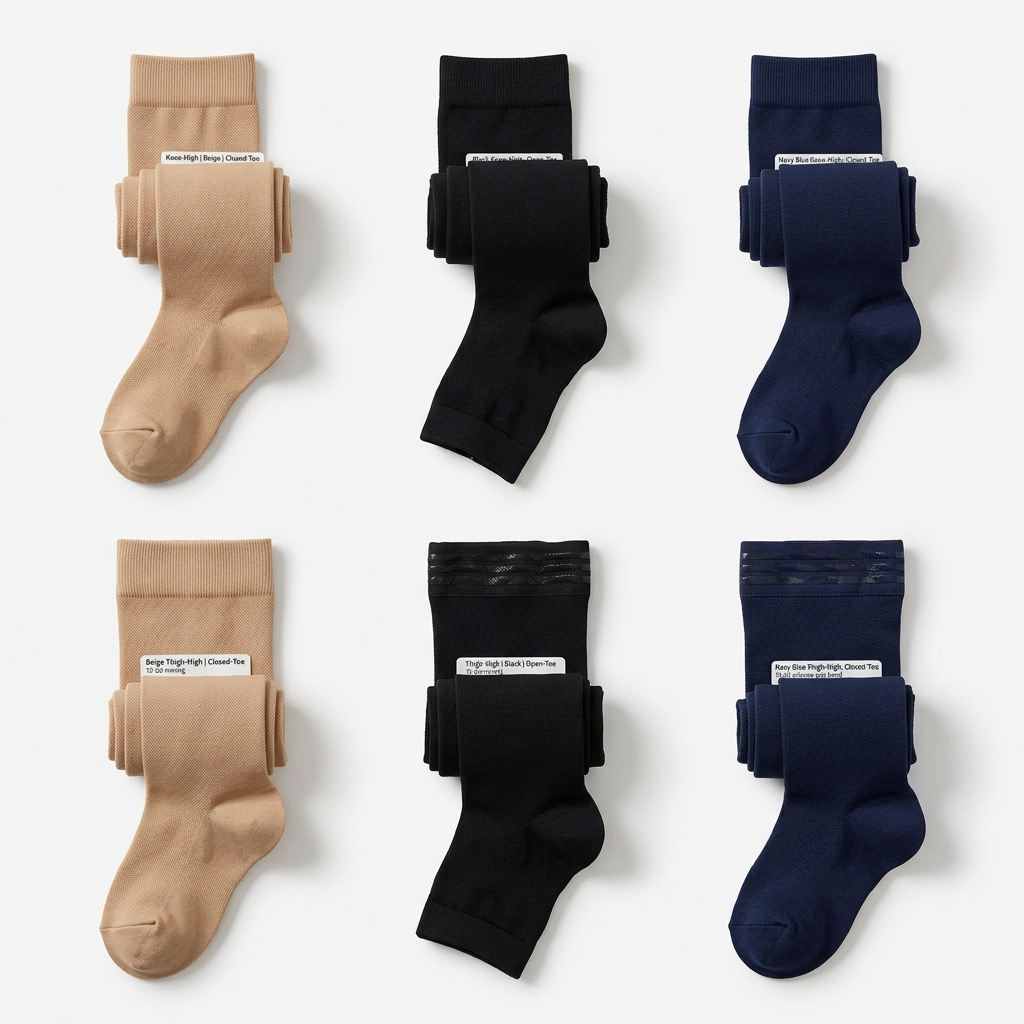
Knee-high compression stockings
Knee-high stockings are commonly used for lower-leg swelling, ankle swelling, and many vein-related symptoms. They are often easier to put on than thigh-high or waist-high options.
Thigh-high compression stockings
Thigh-high stockings may be considered when symptoms, varicose veins, or swelling extend above the knee. They can be helpful for some patients but may be harder to keep in place.
Pantyhose or waist-high compression
Waist-high compression may be used when symptoms involve both legs or extend higher into the thighs. Some patients prefer this style; others find it harder to wear.
Compression socks
Compression socks may be useful for mild symptoms, travel, work, or daily leg support. They are often easier to use but may not be enough for more significant vein disease.
Open-toe compression stockings
Open-toe styles may be preferred by patients who want more toe room, wear sandals, have certain foot-shape concerns, or find closed-toe stockings uncomfortable.
Closed-toe compression stockings
Closed-toe styles feel more like traditional socks or hosiery and may be preferred for everyday wear.
How to Choose the Right Compression Stockings
Fit matters as much as pressure
A properly fitted compression stocking should feel snug but not painfully tight. It should not dig into the skin, roll down, bunch behind the knee, or cause numbness, tingling, color changes, or worsening pain.
When choosing compression stockings, consider:
For many patients, the biggest mistake is buying stockings based only on shoe size. Medical compression should usually be selected based on leg measurements.
How to Measure for Compression Stockings
Measure when swelling is lowest
For the best fit, leg measurements are usually taken in the morning or after the legs have been elevated, when swelling is often lower.
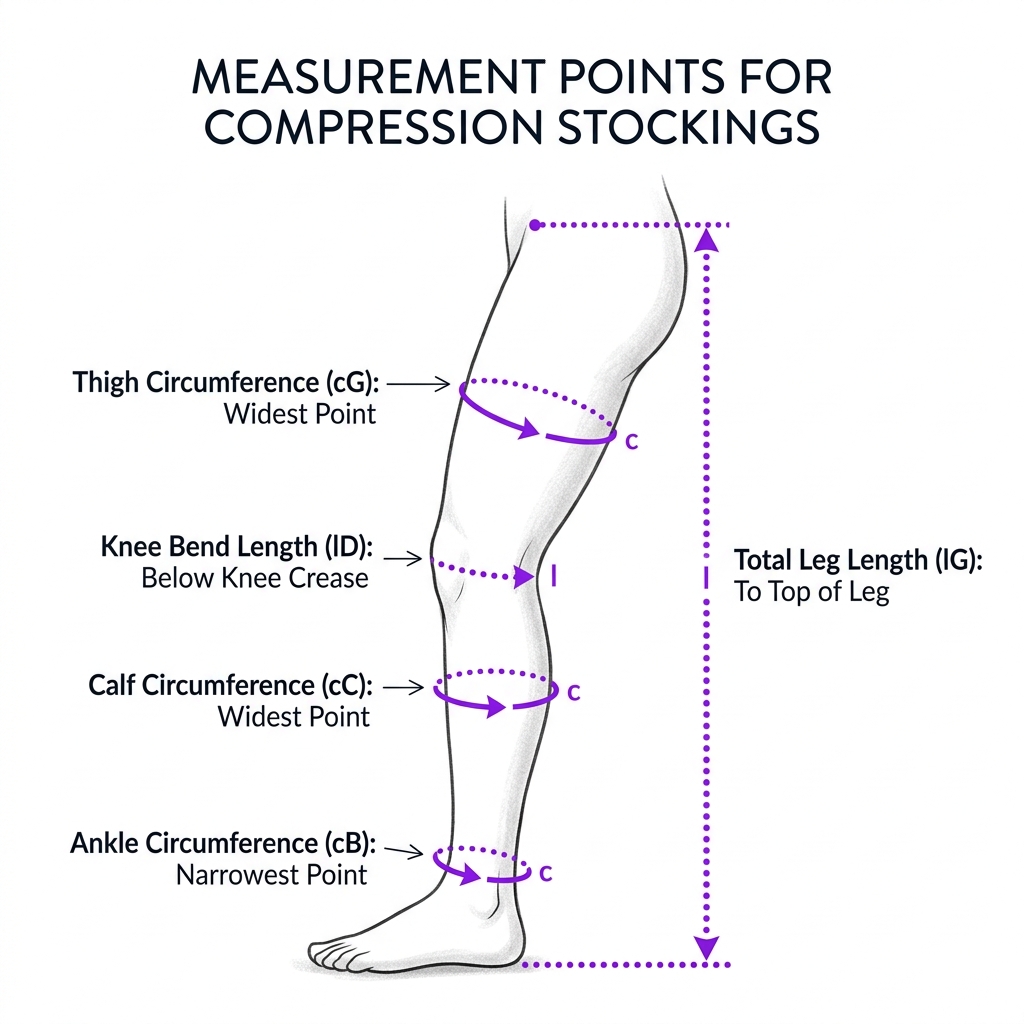
Common measurements may include:
For knee-high stockings
- Ankle circumference at the narrowest point above the ankle bone
- Calf circumference at the widest part of the calf
- Length from the floor to the bend of the knee
For thigh-high stockings
- Ankle circumference
- Calf circumference
- Thigh circumference
- Length from the floor to the upper thigh
For waist-high stockings
- Ankle circumference
- Calf circumference
- Thigh circumference
- Hip or waist measurement
- Leg length
Important:
Each brand may use its own sizing chart. Always match your measurements to the specific product's size guide.
When to Wear Compression Stockings
Most people wear them during the day
Compression stockings are commonly worn during daytime hours, especially when you are upright, standing, sitting, working, traveling, or active.
A common routine is:
Put them on in the morning before swelling builds up.
Wear them during the day.
Remove them before bed unless a clinician tells you otherwise.
Check your skin for irritation, pressure marks, or discomfort.
Do not sleep in compression stockings unless your clinician specifically recommends it.
Tips for Putting Them On
Compression should be snug, but manageable
Compression stockings can be difficult to put on, especially higher-strength stockings.
Helpful tips:
- Put them on early in the day before swelling increases.
- Make sure your legs are dry.
- Avoid applying lotion right before putting them on.
- Turn the stocking partly inside out before placing it over the foot.
- Smooth out wrinkles as you pull it up.
- Do not fold the top band over.
- Use rubber gloves for better grip.
- Consider a stocking donner or donning aid if needed.
A stocking that is folded, wrinkled, or bunched can create areas of excess pressure.

Common Problems and Fixes
Small adjustments can make compression easier
"They roll down."
The size may be wrong, the length may be too long, or the top band may not match your leg shape.
"They hurt behind my knee."
The stocking may be too long, bunched, or pulled too high.
"My toes feel cramped."
An open-toe style may be more comfortable.
"They are too hard to put on."
You may need a lower compression level, a different fabric, a donning aid, or help selecting a better fit.
"They leave deep marks."
Some mild marks can happen, but painful grooves, numbness, color changes, or skin injury are not normal.
"They make my symptoms worse."
Stop using them and contact a clinician, especially if you have pain, numbness, tingling, color changes, cold feet, or worsening swelling.
Who Should Ask a Clinician First?
Compression is common, but it is not risk-free
Talk with a clinician before using medical-grade compression if you have:
If you are unsure, ask before starting.
Book Online ConsultationCompression and Vein Treatment
Compression may be used before or after procedures
Some patients use compression before vein treatment as part of conservative care. Others may use compression after certain procedures as part of recovery.
Compression may be discussed before or after treatments such as:
How long compression is used depends on the procedure, symptoms, clinician preference, and patient-specific factors.
Gentle Vein Care Center is currently starting with online consultations. Future in-person ultrasound and vein treatments are planned for our Central Florida clinic phase.
Compression for Work, Travel, and Daily Life
Support for long days on your feet or sitting for hours
Some people use compression stockings even before they have a diagnosed vein problem. Compression may be considered for:
Standing jobs
Nurses, teachers, retail workers, salon professionals, restaurant workers, healthcare workers, and others who stand for long periods may experience leg fatigue or swelling.
Desk work
Sitting for long hours can contribute to leg discomfort or swelling in some people.
Travel
Long car rides or flights can lead to leg swelling. Some travelers use light or moderate compression for comfort and support.
Pregnancy
Pregnancy can increase leg swelling and visible veins. Pregnant patients should ask their clinician what compression level is appropriate.
Exercise and walking
Some people use compression during activity for comfort, although medical compression should be selected carefully when symptoms are present.

Compression Therapy and Your Online Consultation
Get help deciding what makes sense for you
During an online vein consultation, the physician may discuss:
- Whether your symptoms sound vein-related
- Whether compression may be reasonable
- What compression level may be appropriate to ask about
- Whether your symptoms suggest a need for ultrasound
- Whether you should avoid compression until evaluated
- Whether your symptoms need urgent or in-person care
- How compression fits into your broader next-step plan
Telehealth cannot measure your legs through the screen or perform a vascular exam. But it can help you understand whether compression is a reasonable first step or whether another type of evaluation should come first.
When to Seek Urgent Care
Do not use compression to delay urgent evaluation
Do not rely on compression stockings if you have symptoms that may be urgent.
Seek urgent medical care, emergency care, or contact your physician right away if you have:
Compression therapy should never delay emergency care.
Frequently Asked Questions
Do compression stockings cure varicose veins?
What compression level should I start with?
Are knee-high compression stockings enough?
Should I wear compression stockings all day?
Can I sleep in compression stockings?
Why are my compression stockings uncomfortable?
Can compression stockings be harmful?
Do I need a prescription?
Can compression help with spider veins?
Can compression help with swelling?
Get guidance before guessing
Compression stockings can be helpful, but the right choice depends on your symptoms, measurements, medical history, and goals.
If you are in Florida and have leg swelling, aching, heaviness, visible veins, restless legs, or skin changes, an online consultation can help you understand whether compression therapy may fit into your next-step plan.
Online consultations are available for eligible Florida patients. Central Florida in-person vein clinic location coming soon.